I have 17+ years of neurosurgical experience. Two fellowships after residency. 161 publications. I'm active on social media talking about neurosurgical disease every day. I read journals. I go to conferences.
And I completely missed Welireg.
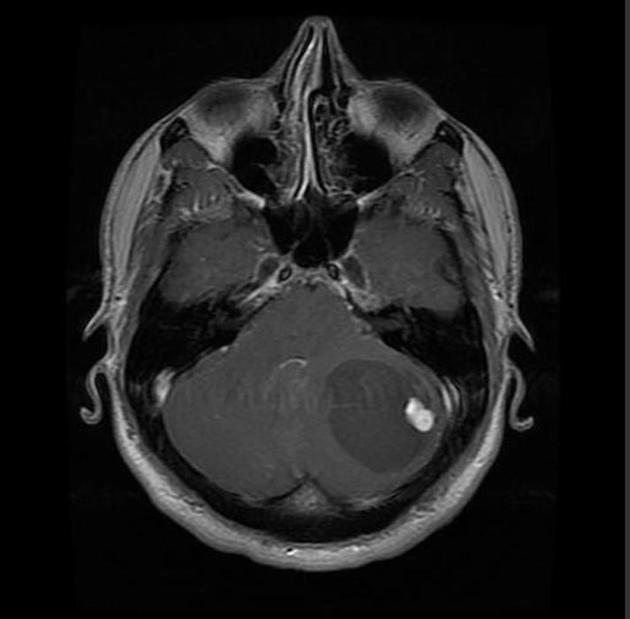
Belzutifan is an HIF-2 alpha inhibitor the FDA approved in 2021 for von Hippel-Lindau associated tumors, including CNS hemangioblastomas. The pivotal trial showed a 63% response rate. A pill shrinking brain tumors in a disease where patients historically had no pharmacologic option and faced repeated surgeries over a lifetime.
I only see a handful of VHL patients a year. But that's the problem. The information wasn't hidden. It was in major journals, covered widely in oncology. But when you don't know something exists, you can't search for it.
The Gap Between AI Hype and What Physicians Actually Need
Nowadays, we talk about AI in medicine constantly. Scribes, coding and billing, ambient listening. All real. All useful. But the use case that really gets me excited is different.
An AI agent that knows my practice and surfaces what I need to know, before I need to know it.
Not a search engine. An agent.
Something that knows I treat hemangioblastomas, even rarely, and pushes me the Welireg data the month it's approved. Something that monitors ClinicalTrials.gov and flags trials my patients could enroll in. A team of tireless workers scouring the abstracts and presentations of new data at meetings worldwide.
The Pieces Already Exist
This isn't speculative. The capability exists right now.
- Claude Code from Anthropic lets you build custom AI agents that connect to external data sources like PubMed and ClinicalTrials.gov through its Model Context Protocol.
- Grok from xAI now runs four specialized agents collaborating in real time on a single query, with live web access built in.
- Persistent background agents that can monitor data feeds, reason across them, and surface relevant findings are no longer a research demo.
What's missing is the connection between these platforms and the workflow of a practicing physician. A background process mapping PubMed, FDA approvals, and guideline updates against your case log, your CPT codes, your subspecialty. When something is relevant, it doesn't wait. It tells you.
What this would actually look like
An agent reads my OR schedule and operative reports. It knows I do clip ligation, flow diversion, and skull base. It quietly watches FDA approvals, society guideline updates, and major journal tables of contents. When a new HIF-2 alpha inhibitor gets approved for a tumor I resect, I get a one-paragraph summary in my inbox the same week. Not a newsletter. A signal.
Thinking Bigger Than Scribes
AI decision support and ambient documentation are great. They take real friction out of my day. But we need to think bigger.
The deeper problem isn't note-writing speed. It's that the body of medical knowledge has grown beyond what any one physician can track, and the cost of missing something falls directly on patients in subspecialties where one drug approval can replace a lifetime of surgeries.
I want to make sure I never miss something like Welireg again.