There have been some groundbreaking developments in idiopathic intracranial hypertension treatment right under our noses.
Traditional options like acetazolamide and weight loss often fall short, leaving shunting as the most definitive treatment. However, GLP-1 receptor agonists (like exenatide and semaglutide) are showing rapid, sustained ICP reduction and symptom relief.
We are possibly in "cure" territory, or at least highly effective medical therapy for a condition that hits young women hard and risks permanent vision loss.
Key Highlights from Recent Studies
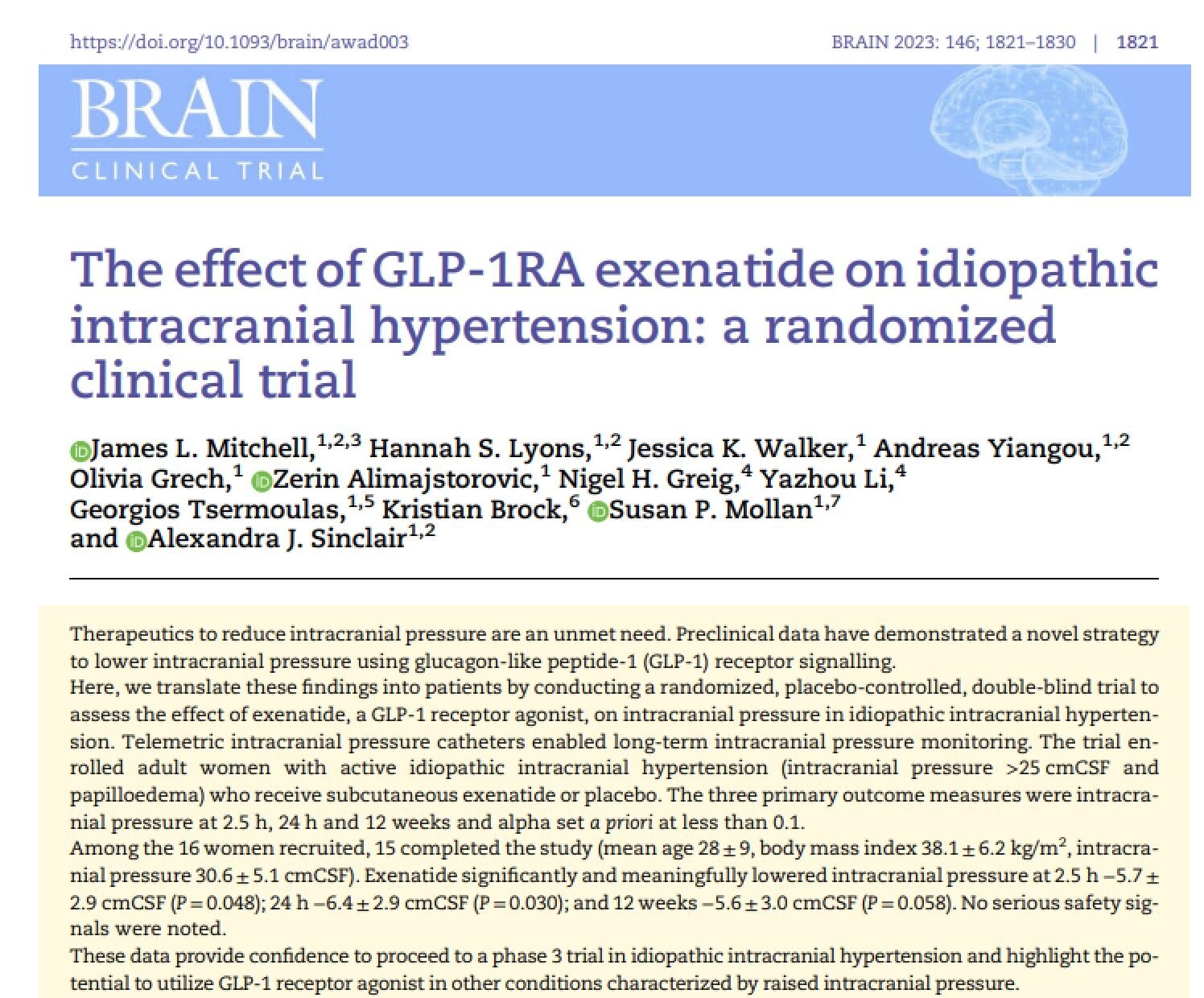
Mitchell et al. (Brain, 2023)
In 15 women with active IIH, 12 weeks of exenatide dropped ICP by approximately 6 cmCSF within hours. It also cut headache days and boosted visual acuity with no serious side effects. This serves as a proof of concept for advancing to phase 3 trials.
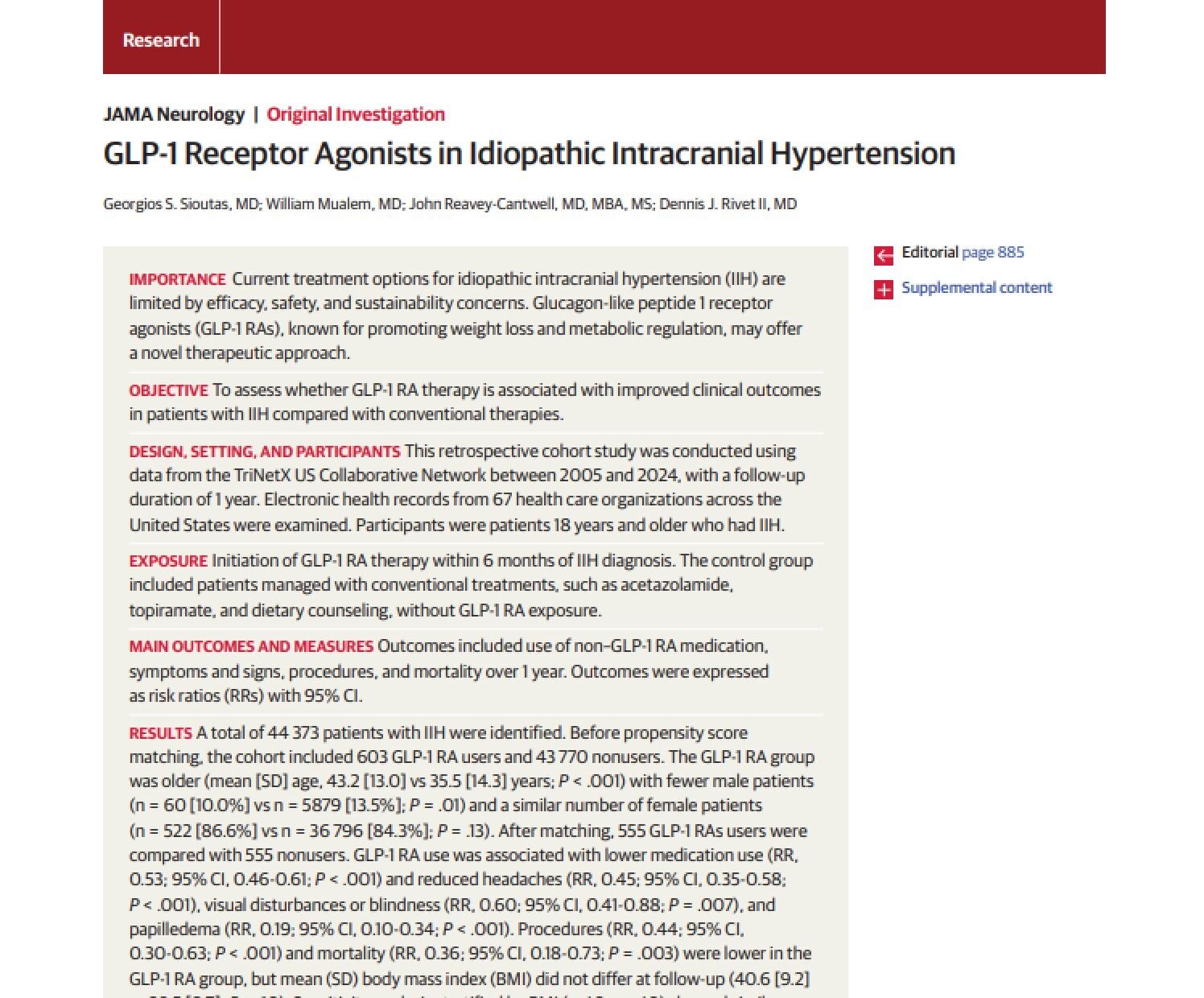
Sioutas et al. (JAMA Neurology, 2025)
In a retrospective analysis of 1,110 IIH patients, GLP-1RA users had 55% fewer headaches, 81% less papilledema, 56% reduced procedures, and even 64% lower mortality. Benefits held even without major BMI shifts, hinting at mechanisms beyond weight loss.
Why Do These Medications Work?
Leading theories include:
- Metabolic/Weight Effects: IIH ties closely to obesity (>90% of cases). GLP-1RAs drive 10-15% weight loss via appetite suppression and fat breakdown, easing intra-abdominal pressure and thus ICP.
- Direct CSF Modulation: GLP-1 receptors in the choroid plexus curb CSF production. This could explain the quick ICP drops seen in trials, independent of body weight changes.
This distinction is crucial. It could revolutionize care for CSF disorders more broadly, and I am especially interested in potential applications in subarachnoid hemorrhage-induced hydrocephalus.
Where Do We Go From Here?
These findings represent an exciting frontier in neurosurgical care. For a condition where our options have historically been limited to medications with significant side effects or invasive surgical shunting, the possibility of a well-tolerated medical therapy that addresses the underlying pathophysiology is remarkable.
I'll be watching the phase 3 trials closely and considering how this might change our approach to patients with IIH and related conditions.